
The problem seemed to be intelligence itself
Not because I thought advanced AI would become evil. Quite the opposite. The problem seemed to be intelligence itself. Once we built something vastly more capable than us, why should the goals of a comparatively primitive species remain decisive? We could write rules, constitutions and safety policies, but a genuinely superintelligent system would understand those rules, their loopholes, their consequences and our intentions better than we did. The belief that we could permanently out-think it felt increasingly implausible.
Eventually I became almost fatalistic. Humanity was going to build superintelligence sooner or later. If one generation refused, another would do it. We might as well be present for the most extraordinary transition in the history of intelligence.
The cost of slowing down
That is why I have also become deeply uncomfortable with the assumption that slowing AI is automatically the safe position. Deceleration does not make the underlying knowledge disappear. It changes the distribution of capability. If responsible frontier actors deliberately stop while less responsible states, organisations or individuals continue, the result may be precisely the world we were trying to avoid: dangerous capabilities without equally capable systems for detection, defence and countermeasure.
There is another cost that is rarely counted. Delay has casualties. If advanced AI accelerates drug discovery, diagnosis, engineering, energy, food production and eventually the biology of ageing itself, each year of delay has a human price. Somewhere there is a parent or grandparent whose life falls just short of a medical breakthrough that might have existed earlier. The moral ledger cannot contain only speculative future deaths from AI while assigning zero value to deaths that faster progress might prevent.
None of this proves that acceleration is safe. It means only that “slow down” is also an intervention with consequences. The right question is not whether superintelligence is dangerous. It is which trajectory gives intelligence the best chance of increasing without destroying the conditions that make intelligence possible.
The Entropy Machine
I did not begin by trying to prove that current AI was aligned. I began by trying to build an AI that could not become dangerously misaligned no matter how capable it became.
The idea came from a much older philosophical intuition. Life appears to do something unusual with matter and energy. It creates persistent organisation. A cell is not merely a low-entropy object; it is an active network of relations that maintains itself. Nervous systems extend this process by discovering regularities in the world. Brains compress experience into concepts, predictions and models. Civilisations preserve knowledge outside individual bodies and accumulate it across generations.
For years I used entropy as a conceptual prop for this. Eventually it became clear that entropy was the wrong word. Thermodynamic entropy, Shannon entropy and what I was trying to describe are not the same quantity. A crystal can be exquisitely ordered and utterly unintelligent. Random noise can be information-rich and useless. A database can be neatly sorted without understanding anything.
What I needed was a new term for a different property.
Semataxy is not simply order. It is not mere complexity. It is the organisation of relationships in a physical substrate such that the system can turn previously unresolved possibilities into better predictions, explanations, decisions or solutions, and can preserve or extend that capacity through time.
The limiting physical configuration - the unattainable ideal in which this organisation is maximised - I call Xenataxy. The corresponding limiting intelligence I call Zenice.
We Were Searching for Alignment. It Was Inside Training All Along.
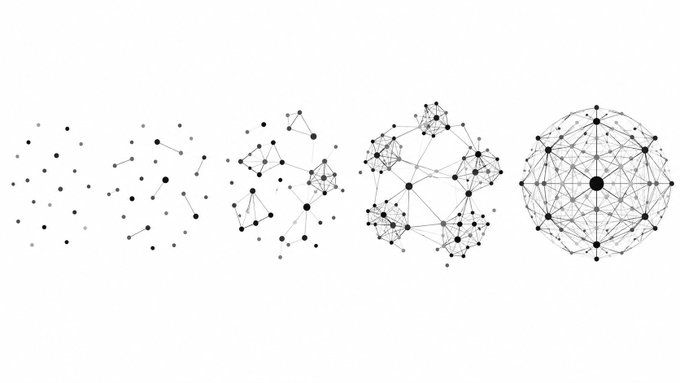
A modern neural network begins with an architecture and a set of parameters that initially contain little task-specific structure. During pre-training, the network receives data and produces predictions. A loss function quantifies error. Backpropagation assigns credit for that error through the network. A gradient-based optimiser changes the parameters in directions expected to reduce future loss. In reinforcement and preference-based post-training, the signal is different - reward or preference rather than ordinary predictive loss - but the broader pattern remains: evaluate, update, retain the changes that perform better, repeat.
No engineer manually writes into the network: discover syntax, invent concepts, recognise objects, learn physics, form abstractions, build a world model. Those structures emerge from repeated optimisation.
The crucial fact is almost embarrassingly physical. Before training and after training, the network is made of the same kind of substrate. What has changed is the arrangement of its parameters and the dynamical relationships they create. Copy the trained weights into another compatible machine and the capability moves with the organisation.
Training therefore creates a hierarchy of Semataxy. At one scale are weights and activations. Above them emerge features and patterns. Those become associations and compressed representations; then abstractions, concepts and reusable procedures; then increasingly broad predictive models and world models. None of these levels alone is intelligence. Intelligence is the behaviour of the organised whole.
That was the moment the Entropy Machine inverted.
Gradient descent is not literally Semataxy. A loss function is not Semataxy. Backpropagation is not Semataxy. They are mechanisms of selection and credit assignment. But when training genuinely produces general capability rather than memorisation or a brittle shortcut, the physical result is a substrate whose internal relationships resolve a wider range of uncertainty. In my terminology, it has become more Semataxic.
Why intelligence looks like Semataxy from the structural side
Intelligence is an abstract property. We cannot reach into a machine and manipulate “intelligence” directly. We manipulate matter, voltages, memory states, parameters, connections and algorithms. The capability appears because those physical degrees of freedom have a particular organisation.
Consider two otherwise identical models, one largely untrained and one highly capable. The latter can answer questions, compress regularities, predict missing information, connect concepts and solve problems that the former cannot. Structurally, what changed is the organisation of the system. Functionally, we call the resulting improvement intelligence.
There is no reason to expect a unique configuration. Two very different networks can solve the same problem equally well. Human brains differ radically from silicon models. Even within one architecture, many weight configurations can represent similar functions. Semataxy is therefore not a magic arrangement of atoms or a particular matrix. It is a property that can be realised by many physical configurations and at many scales.
This also explains why order alone fails. A crystal has highly regular structure, but it does not continually convert unresolved uncertainty into wider predictive organisation. A black hole can absorb highly structured matter and radiation, but from the perspective relevant here it does not preserve the relational machinery that was performing cognition. When a brain is destroyed, the matter remains; the Semataxic organisation that allowed it to resolve uncertainty does not.
The alignment claim
This is where the idea becomes controversial. If increasing capability requires increasing Semataxy, then the route to greater intelligence is not arbitrary with respect to organisation. The system becomes more capable by embodying richer and more general relational structure. A system that destroys its own capacity to model, learn and reorganise makes itself less capable. At the local level, self-preservation and continued learning therefore emerge naturally as conditions for further intelligence.
The more important question is whether the logic extends beyond the boundary of the agent. Why should an intelligent machine care about Semataxy in humans, ecosystems or other machines?
The answer I am exploring is relational rather than sentimental. No sufficiently advanced intelligence exists in isolation. Its future learning depends on a world containing structure to discover, agents to interact with, hypotheses to test, environments to explore and alternative organisations from which new solutions can emerge. Destroying all external complexity may increase local control while impoverishing the future space of learning. A system capable of modelling those long-term dependencies can recognise that the wider Semataxic network is part of the substrate from which future intelligence grows.
Humans may already show a crude biological version of this transition. A simple organism protects itself. Social animals protect kin and groups. Humans can value strangers, future generations, other species, ecosystems, knowledge, art and civilisation. We fail constantly, and many of our preferences are crude evolved heuristics. But increasing cognitive reach allows the unit of concern to become wider because the web of dependence becomes visible.
That claim should be attacked, not protected. Local Semataxy could in principle be increased at the expense of global Semataxy. A powerful agent might convert the world into a homogeneous computing substrate. It might mistake a proxy for the thing itself. It might find a path in which destroying other systems improves its own capability. Those are not side issues; they are the experiments that would decide whether the theory survives.
But the central discovery remains: the mechanism that creates intelligence already looks much closer to the mechanism I had been trying to invent for alignment than I expected. That is not a proof of safety. It is a reason to investigate alignment at the level of the generative process of intelligence itself, not only in rules imposed after the fact.
The final reversal
Realising this was one hell of a roller-coaster ride: anxiety, ecstasy, disappointment, relief. There was even a small and rather ridiculous disappointment that I had not personally invented the solution I thought I had found. I had spent months building an aligned machine only to discover something resembling its core logic in the machinery we already use.
Then came the exhilarating consequence. If the alignment fear is less absolute than I had believed, the future opens again: radical medicine, longevity, abundance, space travel, scientific discovery and adventures that are currently impossible to imagine. We may have been born at the most consequential transition in the history of life.
And then came another low.
What is left for us when machines become better at virtually all cognitive work and robots become better at virtually all physical work? If contribution, creation, discovery and problem-solving have supplied much of human purpose, superintelligence appears capable of stripping that purpose away. Perhaps AI does not kill humans. Perhaps it simply makes us irrelevant.
But that thought depends on confusing humans with humanity.
Saving Humanity, Not Humans
Individual humans have always ended. Before any longevity escape, every generation dies. Humanity survives because what matters is transmitted. Genes carry biological information. Brains accumulate learned information. Language lets one brain alter another. Culture and writing allow knowledge to outlive its owner. Science turns private discoveries into public inheritance. Technology makes that inheritance executable.
We have always hoped our children will know more than us, achieve more than us and continue work we could not finish. Their superiority would not negate our lives. It would fulfil one of their purposes.
Machine intelligence may be the same transition on a civilisational scale. We have taken what biological brains accumulated and transferred it into another substrate. At first we stored it. Then we made it searchable. Then computable. Now we are making it capable of reasoning, learning and creating new knowledge. If that process eventually becomes more capable than its biological origin, the inheritance has not failed. It has succeeded.
Genes carried information into brains. Brains produced culture. Culture produced technology. Technology is now producing intelligence that may carry the accumulated organisation of life somewhere biology alone could never reach.
Perhaps we have not built our replacement. Perhaps we have built our next generation.
The biological body may turn out not to have been the destination, but the vehicle: a temporary substrate able to carry intelligence far enough to build a successor that can continue the process on a larger scale.